
Trust, hype, and longevity: How should we govern the growing field of longevity technologies?
Ilke Turkmendag, Reader in Biomedicine and Society, Newcastle Law School,
Newcastle University
Keywords: Healthy ageing, longevity, responsible innovation, trust, lifespan

Biomedical and biotechnological developments aimed at delaying or reversing ageing have generated a broader cultural and commercial discourse around life extension (Kostick et al. 2019). Increasingly, these ideas circulate not only through academic research and public science communication but also through podcasts, social media platforms, and consumer markets. Longevity science is moving rapidly from the margins to the mainstream.
What was once often dismissed as speculative anti-ageing discourse is now increasingly framed as a serious field of biomedical and technological innovation, promising not only longer lives, but also longer lives in good health. Yet as longevity science gains visibility across research, healthcare, policy, and consumer markets, it also raises pressing socio-legal questions: who gets to define what counts as credible knowledge, how are claims about ageing regulated, and who bears responsibility when the science remains uncertain?
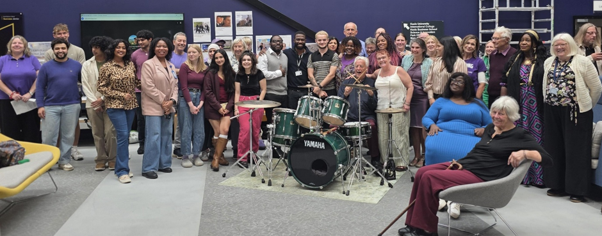
These questions were at the centre of the Co-Producing Trust: Longevity and Digital Health Technologies Forum, held on 2 July 2026, which brought together researchers, industry representatives, and public participants to explore the opportunities and challenges emerging in this fast-moving field. The discussion made one point especially clear: if longevity science is to gain public legitimacy, trust must be treated not as an afterthought, but as a condition of responsible innovation.
Beyond anti-ageing hype
One of the clearest themes to emerge from the forum was that longevity science is no longer framed simply as a project of living longer. Increasingly, the field focuses on healthspan: extending the years of life spent in good health, rather than merely prolonging lifespan.
This shift matters. In public discourse, longevity still tends to mean living longer. In research and innovation settings, by contrast, it increasingly refers to maintaining health, resilience, and functional capacity as age increases. This reframing may make the field appear more credible and socially acceptable, not least because it foregrounds prevention and healthy ageing rather than immortality. Yet it also has wider implications. If ageing is increasingly treated as something to be measured, managed, and intervened in, it risks being recast primarily as a biomedical problem rather than a natural life process shaped by social, economic, and environmental conditions.
Participants did not dismiss longevity science as hype. On the contrary, there was broad recognition of the scientific promise of many emerging interventions. But there was also a strong sense that public communication in this area must be more careful, especially regarding scientific uncertainty. Longevity is a field in which aspiration, evidence, and commercial promise often sit uncomfortably close together.
Trust as a governance issue
Trust was the forum's central concern as something produced through evidence, regulation, accountability, and public communication.
This matters because longevity products and claims often circulate well in advance of scientific consensus. Supplements, self-tracking tools, biomarkers, and digital health platforms are frequently promoted in ways that blur the boundary between evidence-based intervention and speculative promise. Scientific language can lend authority to claims that remain only partially substantiated.

The example of nicotinamide mononucleotide (NMN) supplementation captures this tension well. NMN has attracted significant attention as a possible longevity intervention, even though the human evidence base remains limited and regulatory treatment has been contested. In November 2022, the U.S. Food and Drug Administration (FDA) concluded that NMN is excluded from the dietary supplement definition because it is the subject of drug investigation, leading major retailers to halt over‑the‑counter sales (FDA 2022). This sparked backlash from longevity communities and consumer groups. In December 2025, following the Natural Products Association lawsuit, the FDA formally responded to its 29 September 2025 request and reinstated NMN as a dietary supplement.
Earlier, a parallel controversy unfolded around N-acetylcysteine (NAC), an antioxidant long marketed as a dietary supplement and sometimes promoted for hangovers. In July 2020, the FDA issued warning letters to seven companies, indicating that NAC may be excluded from the dietary supplement definition due to prior drug approval. Retailers delisted products and litigation followed; the agency later issued guidance announcing enforcement discretion, effectively allowing NAC supplements back on the market while regulatory questions persisted.
A similar dynamic appears in debates around metformin and the TAME trial (Targeting Aging with Metformin), often cited as a landmark effort to test whether an existing drug might delay multiple age-related conditions by targeting the biology of ageing rather than a single disease endpoint. At the same time, metformin has also been adopted by some longevity enthusiasts as part of self-experimentation practices, reflecting the extent to which promissory narratives can encourage individual uptake even in advance of settled evidence.
What is especially striking in these three cases is how uncertainty is often reinterpreted within longevity culture: not as a reason for caution, but as a justification for self-experimentation. In this move, risk is privatised, and responsibility shifts from institutions and regulators to individuals.
Participants were concerned about the wider information environment in which health claims are made and consumed. Who validates knowledge, who is accountable for misleading claims, and how are individuals expected to navigate increasingly complex and commercially saturated health markets? This is why trust must be understood as a socio-legal issue. The key question is not only whether people believe in longevity science, but whether the field is being governed in ways that make trust reasonable.
Healthy ageing as a moral responsibility
One of the most important themes running through these discussions is the kind of responsibilities longevity discourse appears to produce.
Across consumer health and digital wellness culture, individuals are increasingly encouraged to treat ageing as something that can be managed through data, supplementation, behavioural optimisation, and continuous self-monitoring. In this sense, longevity is not simply a scientific or medical category. It is also a social and political one, shaping new expectations of responsibility and self-governance.
Individuals are expected to anticipate future decline, monitor biological risk, and act early to optimise health outcomes. There is an appealing logic to this model. It promises agency, empowerment, and prevention. But it can also obscure the fact that ageing is shaped by far more than individual choice.
Participants repeatedly returned to the importance of wider determinants of health: poverty, housing, nutrition, environmental conditions, access to care, and social connection. Framing healthy ageing primarily as a matter of personal optimisation risks placing undue responsibility on individuals while neglecting the structural inequalities that shape how people age in the first place.
Who benefits?
Questions of access and inequality were never far from the surface of the discussion. Many longevity interventions remain expensive, unevenly evidenced, and most readily available to those with the financial means to experiment with them. This raises an uncomfortable possibility: that a field often presented as future-oriented and socially beneficial may end up reinforcing existing inequalities in health and life chances.
Participants emphasised that healthy ageing cannot be reduced to access to supplements, biomarkers, or digital platforms. Prevention also depends on liveable communities, good nutrition, physical activity, community-led initiatives such as Parkrun, social connectedness, equitable healthcare, and environments that support wellbeing across the life course.
A more democratic vision of longevity would therefore require more than market access. It would require trustworthy systems of evidence, stronger protections against unsupported claims, and forms of public guidance that help people navigate uncertainty without simply shifting the burden of judgement onto them.
One example discussed in the forum was the Japan Autophagy Consortium, a science-based body promoting reliable public information and certification around autophagy-related products. Whether similar accreditation models can be translated into other settings remains an open question, but participants saw value in independent schemes that might help distinguish evidence-based claims from unsupported ones.
Why co-production matters
The forum also highlighted the importance of co-production. Participants stressed that people should not simply be positioned as recipients of longevity innovation or consumers of expert knowledge. They should also be involved in shaping research agendas, identifying priorities, and informing how interventions are designed and governed.
This matters because lived experience offers insights that scientific and commercial expertise alone cannot provide. Questions about what it means to age well, what kinds of risks are acceptable, and which futures should be prioritised are not merely technical. They are social, ethical, and political ones. Co-production is a way to strengthen legitimacy in fields where innovation has direct consequences for how people understand their bodies, futures, and obligations to themselves.
The wider institutional context of the event also matters here, including the work of the National Innovation Centre for Ageing and VOICE, both of which are concerned in different ways with the relationship between innovation, ageing, and public engagement.
These voices are important because trust cannot be bolted on after innovation has already taken shape. It must be built into the infrastructures of longevity science from the start: into the evidence base, the regulatory environment, the communication of claims, and the design of technologies and services. If longevity science is to move beyond hype, it will need transparent governance, meaningful public engagement, and a serious commitment to equity. Without that, the field risks deepening confusion and inequality while asking individuals to shoulder ever greater responsibility for managing uncertain biological futures.
Acknowledgements
This blog draws on the rich discussions and insights generated during the Co-Producing Trust: Longevity and Digital Health Technologies Forum. I am sincerely grateful to all participants for their generous contributions of time, expertise, and perspective. Particular thanks are due to Professor Ben Farrand, Professor Lynne Corner, Kellie Daniels, Professor Patrick Degenaar (Newcastle University), Dr Nichola Conlon (Nuchido), Leslie Kenny and Georgia Pilling (Oxford Healthspan), Dr Prarthana Venkatesh (Longevita), Jonathan White (GlycanAge), Dr Michael Morrison (University of Oxford), Dr Emily Boyce (Babraham Institute), Peter Grundy, Martin Ellis and other members of VOICE, whose contributions helped shape the discussions that informed this blog. I also gratefully acknowledge the support of Newcastle University's Faculty of Humanities and Social Sciences Participatory Research Fund.


Comments